

Alexander Read Article
What It Takes to Feed a 10-Year-Old Across Svalbard
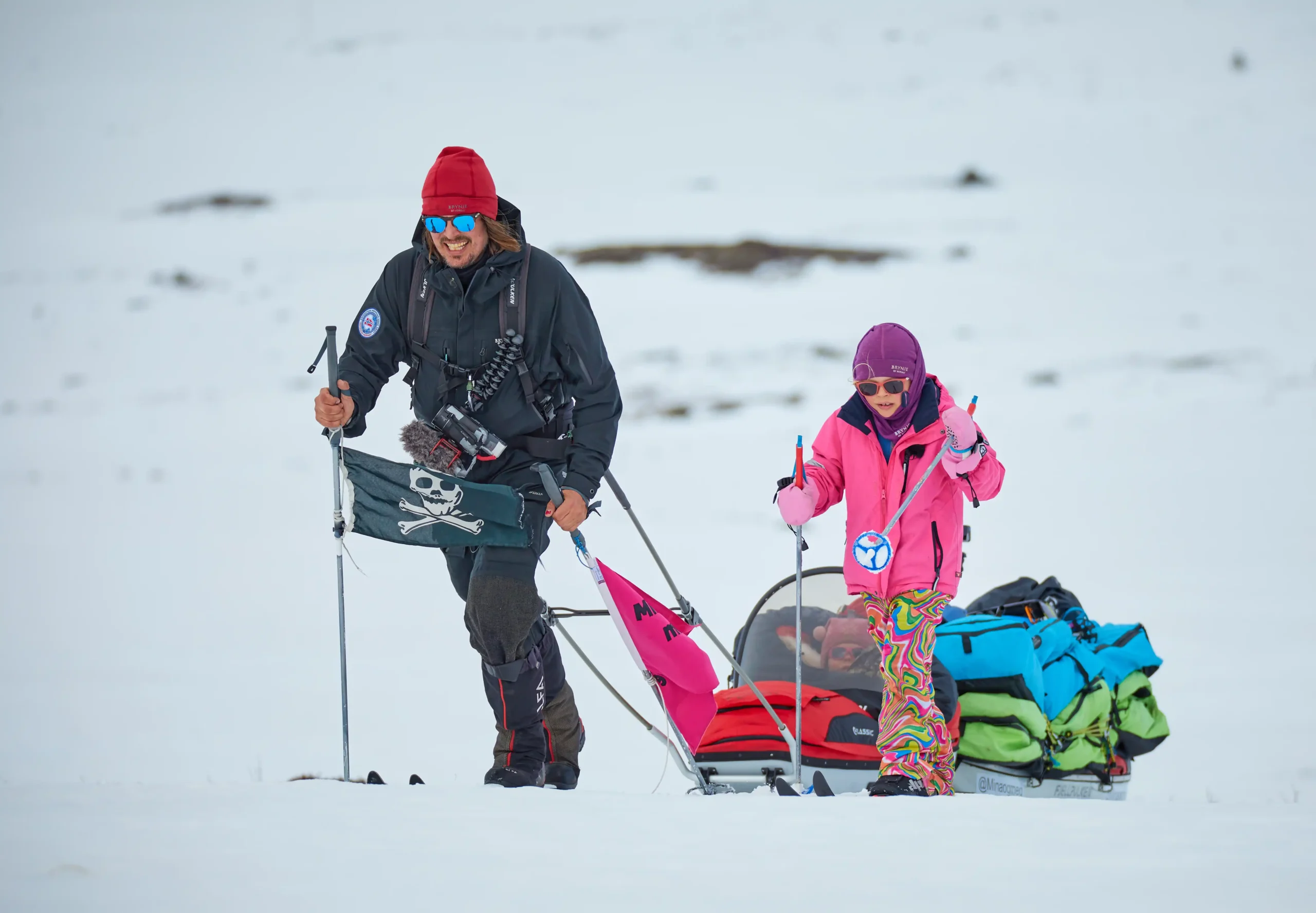
Most expedition nutrition guides assume one thing: the person reading them is an adult. Alexander Read didn’t have that option. In March 2026, he and his daughter Mina — 10 years old — left Svalbard’s southern tip and skied 600 kilometres north through Arctic terrain.
Published
Most expedition nutrition guides assume one thing: the person reading them is an adult.
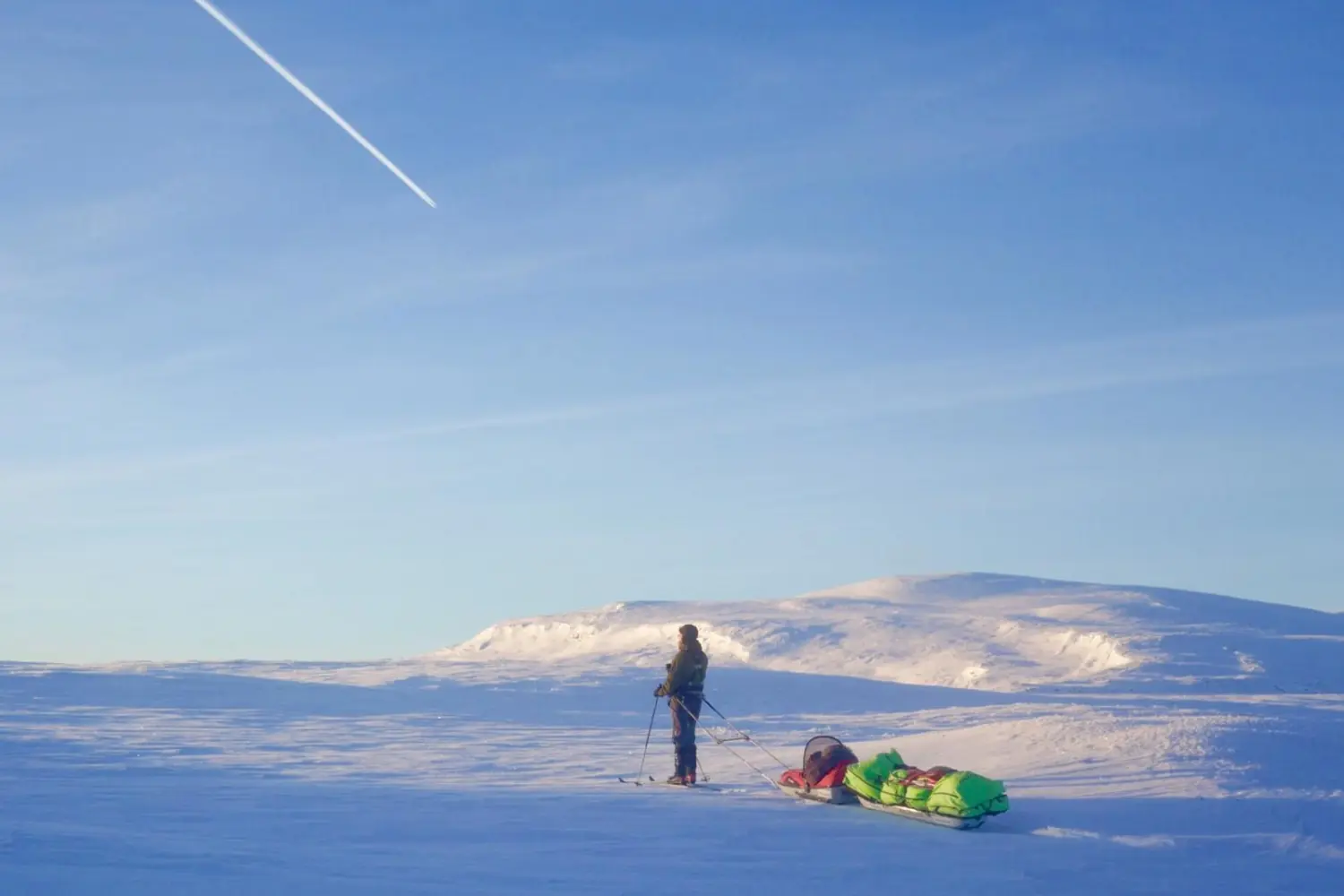
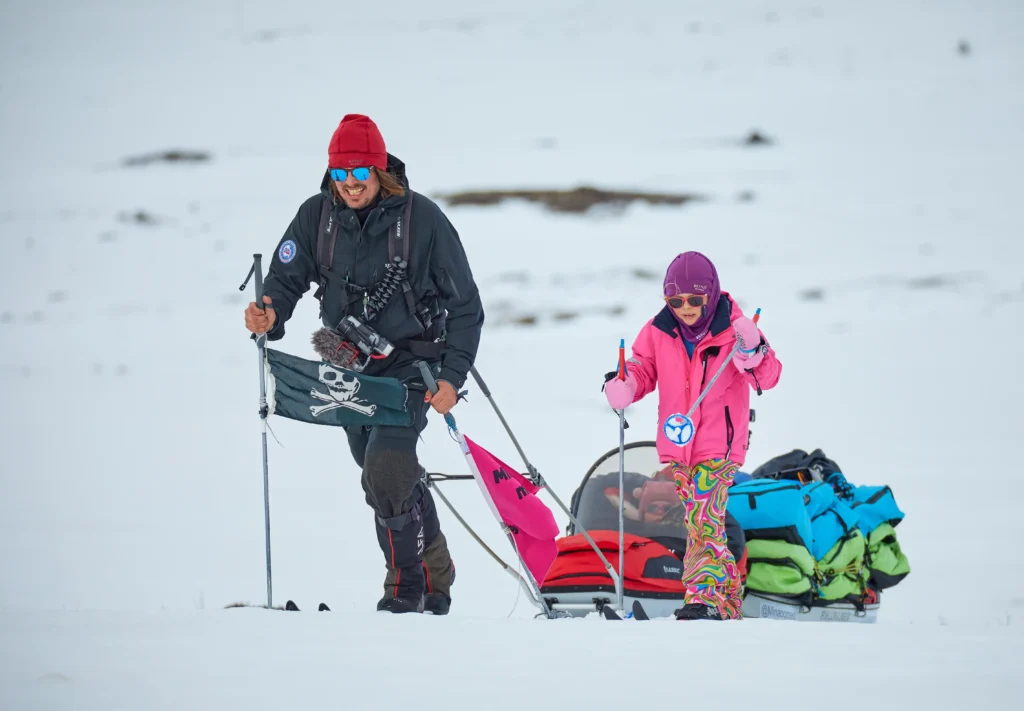
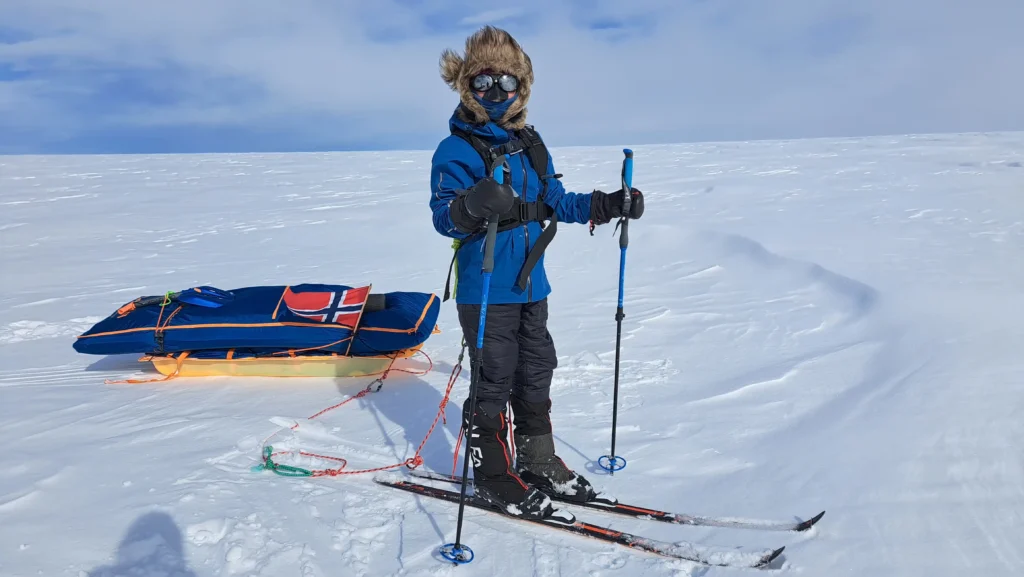
Alexander Read didn’t have that option. In March 2026, he and his daughter Mina — 10 years old — left Svalbard’s southern tip and skied 600 kilometres north through Arctic terrain. Forty-six days. 7,000 metres of vertical gain. Temperatures that kept dropping. A polar bear corridor where stopping for lunch wasn’t an option.
The expedition, documented at minaogmeg.no, was not Mina’s first time in serious cold. She has grown up with expeditions as a natural part of life. But it was her biggest. And for Alexander, the question of how to fuel a child through six weeks of Arctic winter demanded a different level of planning.
Here’s what he learned.
The Question Most People Get Wrong
Before the logistics, there’s the mindset.
Alexander didn’t start by asking: how much food can we carry? He started by asking: what does Mina’s body actually need?
That distinction matters. As he put it plainly: even if there are limits to what you can carry in a sled, that’s not what dictates what the body needs. The body dictates that. You learn your body’s requirements and build the plan from there — depots if necessary, full carry if you can manage it.
For experienced expeditioners, this seems obvious. In practice, many people reverse it. They decide what weight they can pull and then try to retrofit nutrition into that constraint. In Arctic conditions, where calorie deficit compounds physically and mentally over weeks, that’s a dangerous approach.
Alexander started with a proper nutrition baseline consulting a dietitian to calibrate both his own intake and Mina’s separately. Children under load in cold environments are not just small adults. Their thermoregulation, metabolic demands, and recovery patterns differ. Getting that wrong over 46 days isn’t a minor inconvenience.
Building the System: Five-Day Ration Bags
One of the most practical structures Alexander built was a 5-day ration bag system for Mina.
Each bag covered five complete days of food. Inside each bag, everything was pre-divided into individual daily rations: REAL Turmat meals for breakfast, lunch, and dinner; snacks; energy bars; sweets. The full day’s intake, ready to pull from the bag, no decisions required in the field.
The logic is sound. On an expedition that lasts weeks, cognitive load matters. The tent is for recovery, warmth, and food not logistics problems. Knowing exactly what Mina was eating each day meant Alexander could track her intake accurately, flag any shortfall early, and maintain a consistent calorie curve across the expedition.
He also built in a progressive increase in calories over the course of the trip. Early expedition days are demanding. But the body adapts, the distances accumulate, and by the third or fourth week, the physical load is genuinely different from day one. Planning nutrition as a fixed daily number misses that. Alexander and his nutritionist built a ramp into the plan.ore calories as the expedition deepened.
What REAL Turmat Provided
Alexander has worked with REAL Turmat for years, across multiple expeditions with Mina starting from when she was very young. That familiarity is part of the point.
On a 46-day expedition in the Arctic, there is no room for an untested food system. You need to know that the packaging holds. You need to know the product delivers its calories as stated. You need to know it tastes good enough that a 10-year-old after a long day hauling a sled across Svalbard actually wants to eat it.
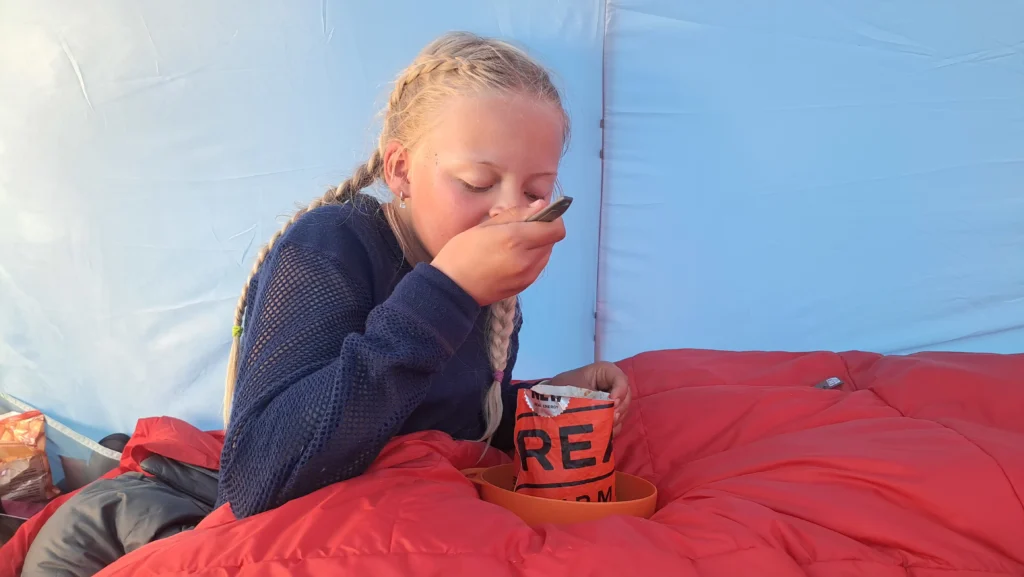
Freeze-dried meals earned their place in this expedition for three concrete reasons. First, taste. A meal that goes untouched in the tent because it’s unpleasant is a calorie deficit waiting to happen. Both Mina and Alexander looked forward to dinner. That’s not a luxury — it’s a nutritional outcome. Second, weight. REAL Turmat made the logistics of a 46-day carry possible in a way that fresh or heavier food simply wouldn’t allow. Third, composition. The calorie density and macronutrient balance was a reliable foundation for the daily plan.
Breakfast and dinner were REAL Turmat every day. Lunch was often REAL Turmat too in the tent, with hot water from morning thermos, sweets, and for Alexander, a large coffee. One hour. Back on skis.
The Tent as a System
It’s easy to think about nutrition as purely physical. What Alexander described was something more complete.
Lunch stops were strategic rest. Not just calories, a chance to check in with Mina properly. To talk. To lower shoulders and step out of the weather for an hour. The tent wasn’t just a meal venue; it was the expedition’s recovery infrastructure.
On the hardest days, Alexander said, routines become more important, not less. And that includes meal routines. The rhythm of stopping, setting up, warming water, eating together: that structure gives difficult days a shape. It creates anchors. When conditions outside are challenging, the meal inside the tent becomes something to move toward, not just something to get through.
There was one day on the route where they deviated. A section Alexander knew was frequented by polar bears. The right call was to keep moving, no lunch stop in the middle of a potential bear corridor. They pushed through and ate later. It was the right decision. But it illustrates what the routines are for: they’re the default because the default is good. You adjust when you must.
Hydration, Equally
Water gets underplayed in cold-weather nutrition planning. Alexander was direct about it: hydration was treated with the same seriousness as food.
Dehydration in cold conditions is genuinely dangerous and also genuinely easy to miss. You don’t sweat visibly. You don’t feel thirsty the same way. But fluid loss from respiration, exertion, and the dry Arctic air is continuous. A body operating at calorie deficit and fluid deficit in -30°C with wind is not a body that performs.
Every day on the Svalbard traverse, hydration was actively managed — not left to instinct.
What This Teaches About Expedition Nutrition
The Svalbard på langs crossing is an extreme reference point. Not many people will ski 600 kilometres through the Arctic with a child. But the principles that made Alexander and Mina’s nutrition system work apply to any serious multi-day expedition in cold conditions.
Calibrate to the individual, not the load. Carrying capacity is a constraint to work around, not a ceiling for nutrition. If your calorie plan is set by sled weight rather than metabolic need, rethink it.
Build systems that remove decisions in the field. Pre-packed daily rations eliminate the cognitive friction of meal planning when you’re tired and cold. The tent is for recovery, not logistics.
Plan for the whole expedition, not the first week. Calorie needs increase over time on a long traverse. A plan that doesn’t account for this will leave you running a growing deficit in the second half of the trip when conditions are hardest and reserves are lowest.
Choose food you trust and food you’ll actually eat. On long expeditions, appetite is variable and sometimes suppressed. Familiar, good-tasting food, food that has been tested on previous trips reduces the risk of under-eating when you can least afford it.
Treat meal breaks as recovery infrastructure. The physical function is obvious. The mental function matters just as much. Structured stops, warm food, and a few minutes out of the wind are as important to long-term performance as the calories themselves.
On Reliability
Alexander was asked what “reliable nutrition” meant to him after finishing the crossing. His answer was four things: safe packaging, good flavour, enough energy, and easy to prepare.
That’s not a complicated list. But in the context of 46 days on the ice where there are no resupply options, no alternatives, and no margin for equipment that lets you down, each of those four things carries real weight.
The meal system has to work every time. In Arctic temperatures, with cold hands, in a tent after a ten-hour day on skis. The food has to come out of the packaging intact, heat properly with cold meltwater, and deliver what the plan requires. Anything that fails on any of those points is a liability, not a food system.
REAL Turmat was with them every day. It didn’t fail.
The Bigger Picture
Mina completed Svalbard på langs. Forty-six days on ski, pulling her own sled, navigating by wind formations in the snow, taking snow samples for a CLEAN research project along the route.
She was 10 years old.
That outcome didn’t happen because nutrition was an afterthought. It happened in part because Alexander treated food as seriously as route planning, weather assessment, and ice safety. Because he consulted a professional to get the numbers right for a child’s body. Because the food system they built was reliable, familiar, and structured from day one to day forty-six.
Gear that works. Food that doesn’t fail. These are the foundations of an expedition that can actually be completed.
For anyone planning a serious multi-day trip in cold conditions — with a child or without — the Svalbard på langs approach to nutrition is a framework worth understanding.