


Field Ration
Arctic Field Ration: What It Is and How We Make It
Built on decades of experience supplying Armed Forces. Arctic Field Rations are made for hard use, cold weather, and long days in the field. Lightweight, energy-dense, and simple to prepare, they show why freeze-dried meals are often the preferred choice when every gram in the pack matters.
An arctic field ration is food built to keep a soldier going in any weather, at any temperature, in the small space a pack allows. We have made field rations for the Norwegian Armed Forces since 1989, and that experience is the foundation for everything we build — from the field to the trail. Here we explain what a field ration is, what goes inside one, how long it lasts, and how it compares to an MRE and to standard military ration packs.
What is a field ration?
A field ration is a complete food supply for a set number of days, packed to survive transport, storage, and hard use. “Field ration” is an umbrella term (operational ration) covering several types. Some are general-purpose, like the American MRE; others are built for a special purpose, for example rations for cold weather. Our Arctic Field Ration is one of these special-purpose, cold-weather rations. It has to be light to carry, last a long time, and prepare simply often with water alone. A good field ration gives people both energy and nutrition and helps them manage day after day. In the Nordic countries, manufacturers usually use freeze-dried food, removing the water to save weight.
What’s inside a field ration?
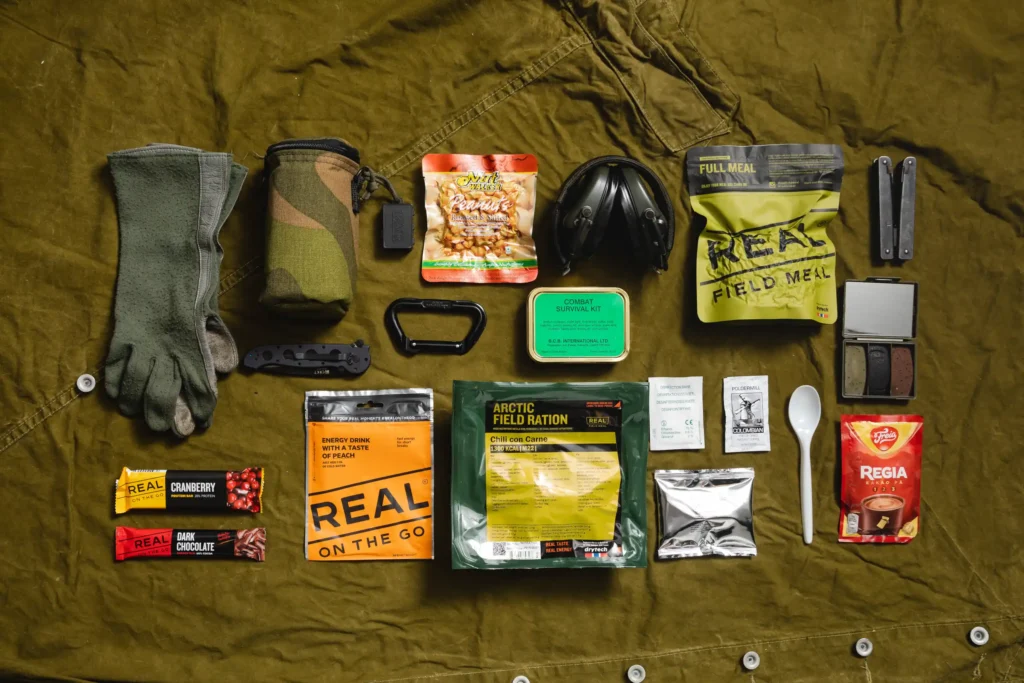
Most field rations are built around a full day’s eating: a main meal or two, something to eat on the move, and a hot drink or two. The unit people refer to as a 24-hour field ration is simply one day’s food in a single pack. Traditional ration packs carry this as ready-to-eat wet food, which is convenient but heavy. A freeze-dried ration carries the same day’s energy at a fraction of the weight, because the water is taken out and added back when needed.
MRE or Arctic Field Ration?
Both the MRE and the Arctic Field Ration are field rations (operational rations). The difference is their purpose and how the food is preserved. The American MRE — the meal ready to eat used by the US Army — is a general-purpose ration: pre-cooked and edible cold, straight from the pack, but heavier because the water travels with it. The Arctic Field Ration is a special-purpose ration built for cold weather, with freeze-dried food as its main component. The water is removed and added back at mealtime, which keeps the weight low and the shelf life long, in exchange for needing water and a heat source. The U.S. military fields its own cold-weather counterpart, the Meal, Cold Weather (MCW). For anyone carrying everything themselves, the freeze-dried ration usually wins on weight and space.
| Food type | Preparation | Weight |
| Traditional MRE | Ready to eat | Usually heavier |
| REAL Field Meal / Arctic Field Ration | Add hot water | Lightweight and compact |
Field rations around the world.
Most national armies issue their own version. The British Army and the U.S. military build their field rations around retort pouches with wet, ready-to-eat food. Others, including the Nordic forces, lean on freeze-dried meals because the cold and the distances make weight the deciding factor. The same principle applies everywhere: give people enough energy for hard days in a form that handles rough use and long storage. What changes is the trade-off each one makes between convenience and weight.
Arctic Field Rations for extreme conditions.
The arctic climate sets its own terms. Energy needs rise, water can freeze, and the food has to be ready quickly before it goes cold. An arctic field ration has to be energy-dense and simple to prepare. Even with gloves on, in wind and snow.
We develop the food in Tromsø, and people use it where conditions are at their hardest: from Armed Forces exercises in the north to expeditions in polar regions.
REAL Field Meal – the ration component.
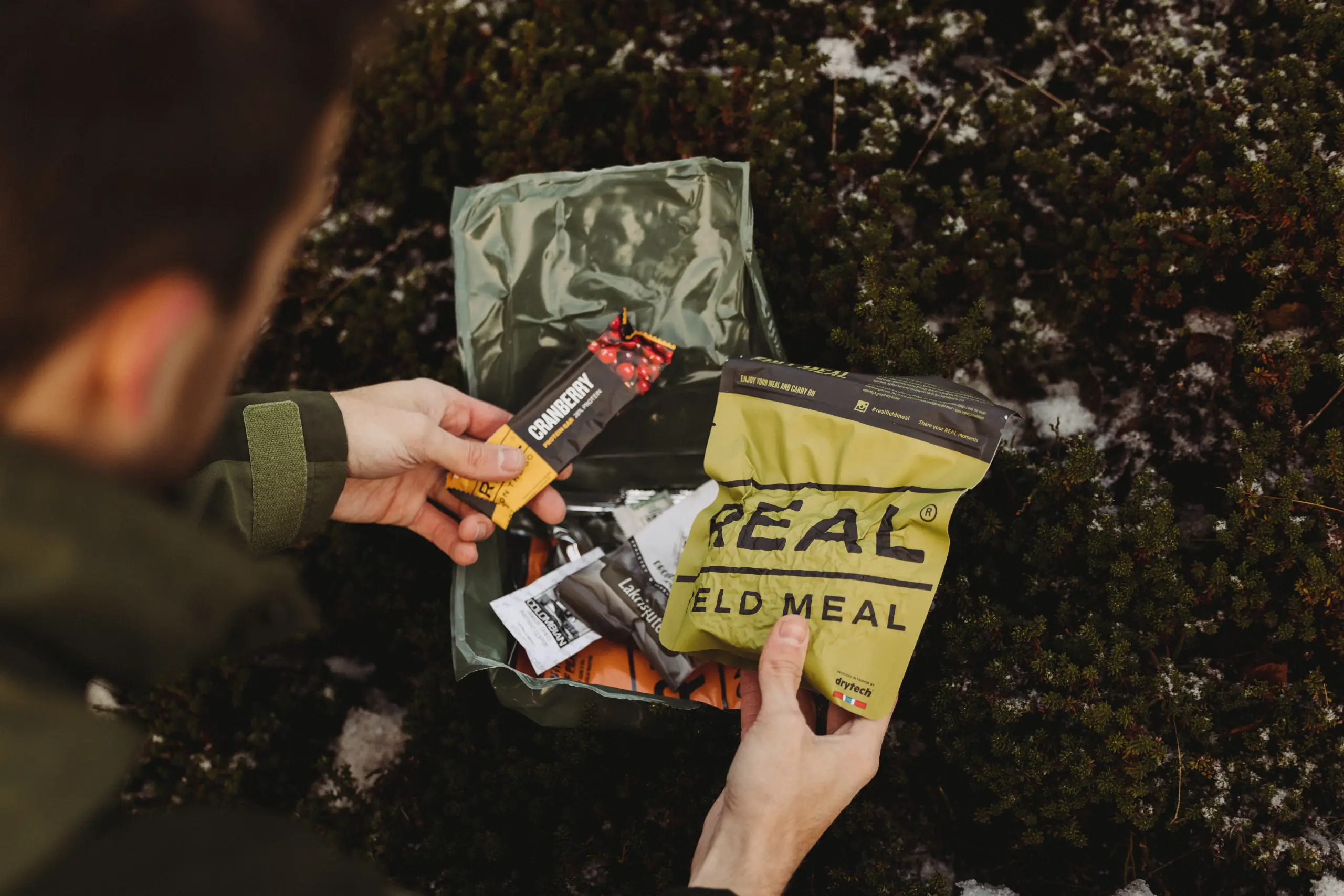
REAL Field Meal is part of the Arctic Field Rations we make for professional use: energy-dense, purpose-built freeze-dried meals, ready in minutes with boiling water. It is the same food and the same experience that sit behind REAL Turmat for the trail and the expedition.
Together, with other components Arctic Field Rations help fulfil the specifications required by the military, giving soldiers the energy and practical food support they need during field activity.
A field ration for the trail, the expedition, and emergency preparedness.
What works in the arctic field works everywhere else. Low weight, long shelf life, and simple preparation are just as useful on a long trek, on an expedition, and in an emergency store at home. The military and arctic heritage is the reason the food holds up when it matters most.
Freeze-dried meals, like homemade.
We freeze-dry homemade stews using techniques that preserve taste, nutrition, and colour.
Frequently asked questions.
What is the difference between the Arctic Field Ration and an MRE?
Both are field rations (operational rations). The MRE is a general-purpose ration the U.S. military pre-cooks as wet food, so you can eat it cold. The Arctic Field Ration is a special-purpose, cold-weather ration built on freeze-dried meals, which makes it lighter and longer-lasting, but you need water to prepare it.
What is inside a field ration?
Roughly a day’s eating: one or two main meals, something for energy on the move, and a hot drink. A 24-hour field ration is one day’s food in a single pack.
How many calories are in a field ration?
We make field rations for cold weather and hard effort energy-dense because the body burns extra calories in the Arctic. The exact energy depends on the spec requirements given by the army.
Can I buy a field ration?
We do not sell the Armed Forces’ rations in store, but the meal component REAL Field Meal you can order online.
How long does a field ration last?
The shelf life depends on whichever item inside has the shortest life. Freeze-dried meals last for years at room temperature. The date is printed on each pouch.
Why is freeze-dried food common in field rations?
By removing the water, we make the food light, compact, and long-lasting. That matters when people need to carry everything themselves.