



Freeze-dried food
Freeze-Dried Food: What It Is, How Long It Lasts, and How to Use
Freeze-dried food gives you a full meal with very little weight, long shelf life, and simple preparation. Made by removing water through freezing and low pressure, it keeps the taste, nutrition, and texture close to the original meal. Ready for the trail, expeditions, and emergency storage at home.
Freeze-dried food is food with almost all of its water removed, leaving a light, compact meal that keeps for years and comes back to life with water. We have made freeze-dried meals in Tromsø since 1989, tested in some of the harshest conditions on earth. Here we explain what freeze-dried food is, how it is made, how long it lasts, and where it earns its place, on the trail, on an expedition, and in an emergency store at home.
What is freeze-dried food?
Freeze-dried food is food where nearly all the water has been removed. Because the water is taken out by freezing rather than heating, the taste, the nutrients, and the shape stay intact. The result is a dry, stable product that regains its texture and flavour once water is added back.
How freeze-drying works.
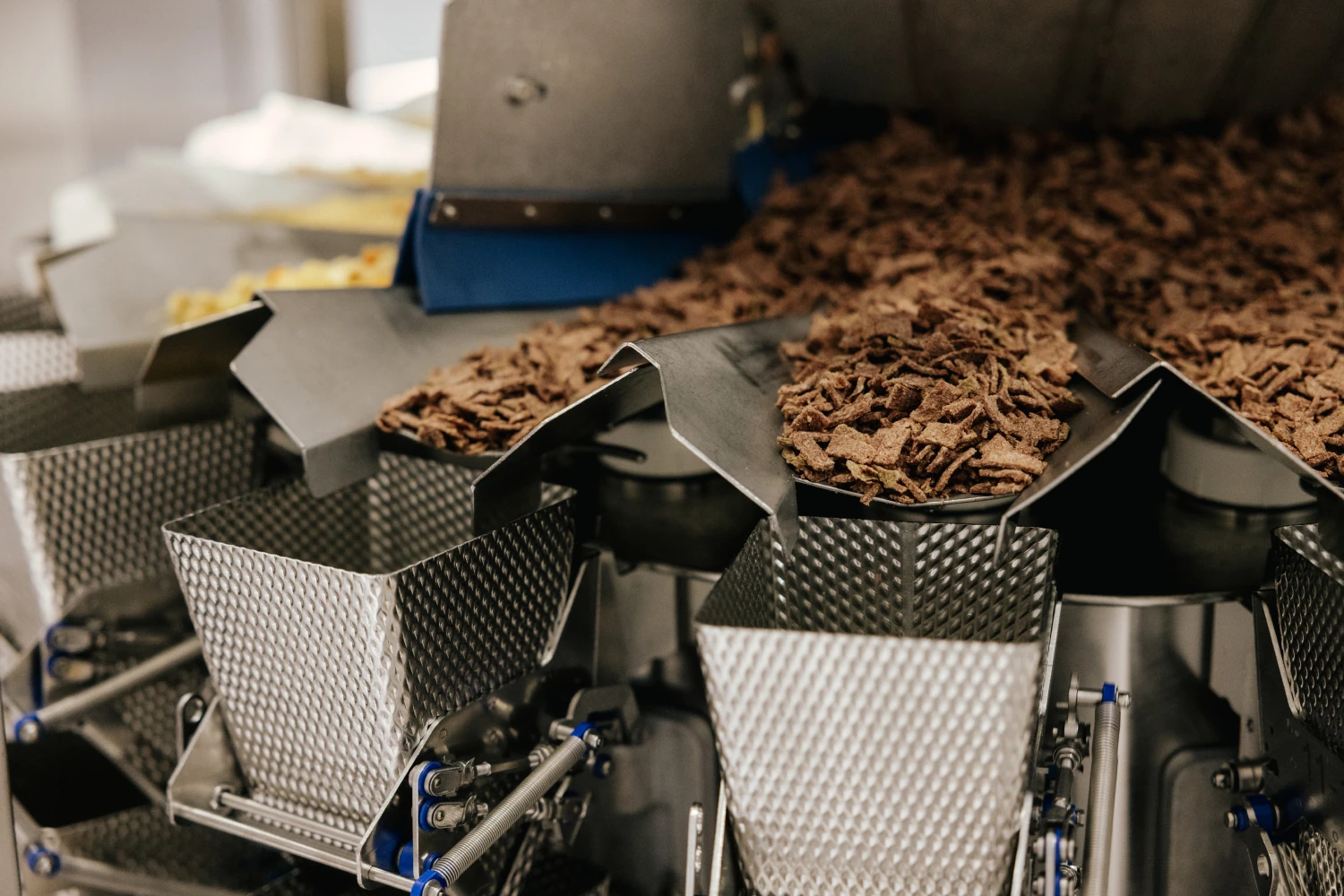
Freeze-drying freezes the food, then lowers the surrounding pressure so the frozen water turns straight from ice to vapour, a step called sublimation. Removing the water this way, without high heat, is what keeps the nutrition and flavour close to the original meal while making it light and shelf-stable.
Freeze-dried vs dehydrated food.
Both methods remove water, but they are not the same. Dehydrating uses heat to evaporate the water, which gives a chewier result and loses some nutrients. Freeze-drying uses freezing and low pressure, so it holds more of the original taste, nutrition, and shape, rehydrates faster, and lasts far longer. Dehydrated food is cheaper to make and more compact; freeze-dried food is lighter, quicker to prepare, and keeps for years. For weight and shelf life, freeze-drying wins. Which is why our meals are freeze-dried.
How long does freeze-dried food last?
Freeze-dried food lasts for years when it is packed to keep out moisture and light. For about half of our meals the shelf life is between five and seven years. The date is printed on each pouch. As an extreme example, a sealed pouch can still be safe to eat decades on, though the taste changes with age.
Tried a REAL meal from 1995 — no bad smell, still vacuum-sealed, surprisingly delicious!
Steffen Sund – customer
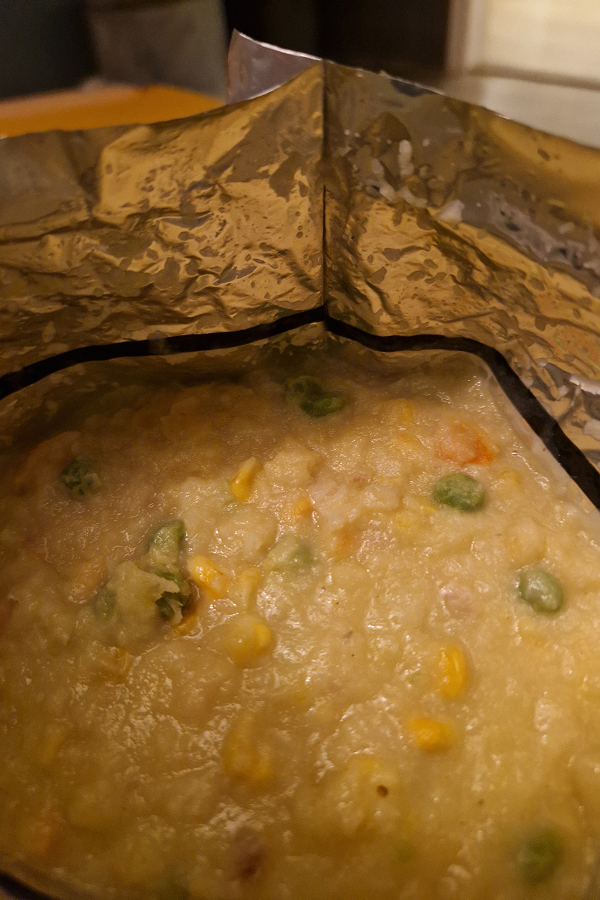
The simplest check is the pouch itself: our meals are vacuum-packed hard, so a firm pack means the food has stayed away from moisture and light. If an older pouch is still sealed and smells normal when opened, it’s often fine to eat.
The benefits of freeze-dried food.
The advantages all follow from removing the water: lasting nutrition, because no heat is used; a long shelf life measured in years; very low weight, which matters when everything is carried; little volume, so it stores in a drawer or a pack; and quick preparation — add water, wait a few minutes, eat.
Freeze-dried food for camping, backpacking and hiking.
For anyone carrying their own food, weight and space decide everything, and a freeze-dried meal is about as light as a full meal gets. There is no cooking and no cleanup. Hot water and a spoon are enough, straight in the pouch. That is why freeze-dried meals are a frequent choice for camping, backpacking, and long hikes.
Freeze-dried food for emergencies and expeditions.
The same qualities make freeze-dried food a sensible base for a home emergency store: it keeps for years, takes little space, and needs only water to prepare. It is also what expeditions and field rations rely on in the cold, where weight and reliability matter most. For a home store, see our guide to emergency preparedness; for the military and arctic side, see arctic field rations.
How we make ours.
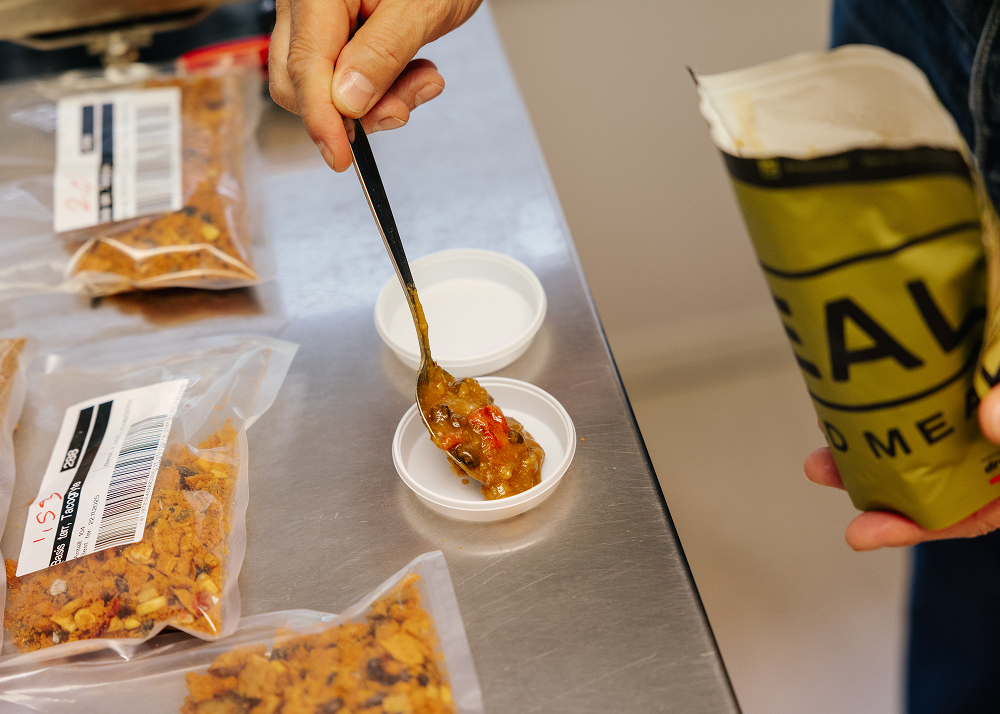
We freeze-dry homemade-style stews including Norwegian classics like our reindeer stew. More on how and where we make our food is on our about page, and the full range is in the shop.
How to prepare freeze-dried food.
- Check the pouch for the recommended amount of water.
- Add that amount of hot water straight into the pouch.
- Stir well so the water reaches all of the food.
- Wait a few minutes for the meal to rehydrate.
- Eat straight from the pouch once the water is absorbed.
Frequently asked questions.
Frequently asked questions
How long does freeze-dried food last?
Years, when packed against moisture and light. Typically five to seven, with the date printed on each pouch. A sealed pouch that smells normal when opened may be safe to eat even when older.
What is the difference between freeze-dried and dehydrated food?
Dehydrating uses heat and gives a chewier, shorter-lived result with some nutrient loss. Freeze-drying uses freezing and low pressure, keeping more taste and nutrition, rehydrating faster, and lasting far longer.
How should freeze-dried food be stored?
Cool, dry, and away from the light. Our pouches are vacuum-packed hard; a firm pack means moisture and light have stayed out. A sealed box adds protection in long-term storage.
Does freeze-drying remove nutrients?
No. Because the water is removed by freezing rather than heat, our freeze-drying method leaves the nutrients in the meal.