

Enjoyed in nature. Made to respect it.
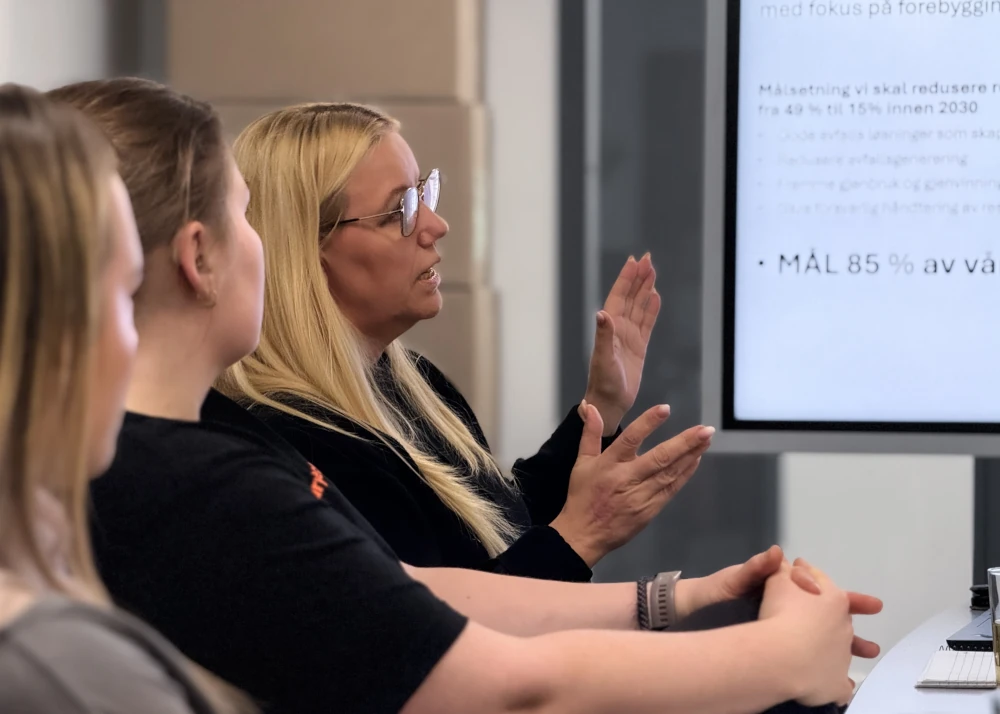
Monica Mathiassen, Sustainability Manager
What we measure ourselves on.
To reach the 2030 target, we work on three fronts:
- Less waste in production. The core of it — a 55% reduction.
- Fewer damaged products. Closely tied to production waste.
- Smarter technology. Up-to-date production and digital infrastructure are a prerequisite.
- Develop the interaction between people and technical equipment to ensure a smooth workflow.
Our approach.
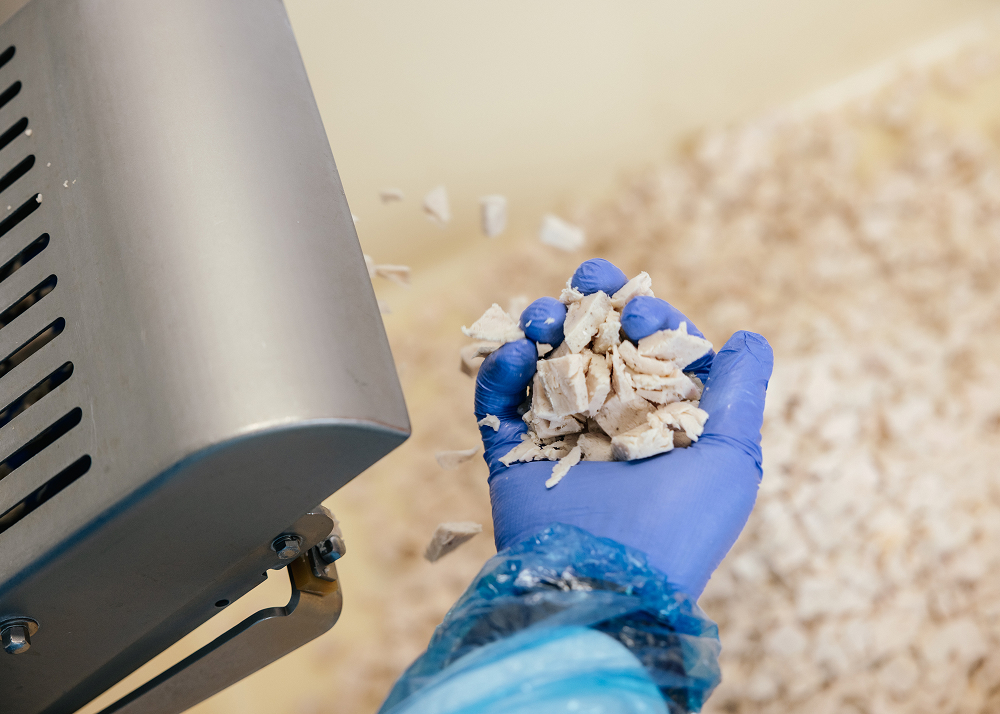
We started by understanding the problem. In 2020 we mapped the entire operation and found where waste actually starts: in raw-material storage, as unsellable or damaged products, and as production loss.
Since then we’ve introduced clear procedures for quality deviations and unsellable products, so less is lost through production and packing. Products that are safe but can’t be sold, we reuse internally or externally rather than discard. Surplus goods go regularly to social and charitable causes — turning potential waste into a resource for the community. In parallel, we invest in smarter production and packing technology for pouches, which cuts waste across the board.
Where we stand.
We have seen very positive development over the past year, measured per produced unit. Comparing 2024 with 2025, our production increased by 38%.
Our work is delivering results. Based on data from our waste supplier, Remiks in Tromsø, we have achieved significant reductions since we started tracking these figures:
- Raw material waste: down 50%
- Defective products: down 91.5%
- Food waste per product: halved since 2020
Over the past year, we have increased production, which has also increased our use of ingredients for preparing and cooking meals in our kitchen. This has resulted in more batches moving through our process for gentle freeze-drying. At the same time, the reject rate in the pouch-packing department continues to decline and is now at a historically low level.
We work systematically to reduce waste through better production planning, continuous process improvement, high raw material utilization, and close follow-up throughout production. Our employees play a central role in this work by identifying opportunities for improvement and contributing to more efficient resource use every day.
Frequently asked questions.
How much has REAL Turmat reduced food waste?
Food waste per product is halved since 2020. Raw-material waste is down 50%, and defective products down 80%.
What’s the 2030 target?
55% less food waste, as part of reaching climate neutrality.
What happens to food that can’t be sold?
Safe but unsellable food is reused either internally or externally, and surplus food is donated to social and charitable causes. We have established strong routines for donating food to our valued partners, Matsentralen and the volunteer organization Team Tromsø for Ukraina, which transports essential food and equipment from Tromsø to Ukraine.
What happens to food waste when it cannot be used as food for people?
Any food waste that still occurs in production is sorted and delivered to our waste partner, Remiks. From there, it is transported to Rå Biopark in Skibotn, where the food waste is processed and used in the production of biogas and biofertilizer. In this way, the resources in the food waste are put to use again and contribute to a more circular value chain.
Although we are committed to ensuring that food waste is put to good use, our most important goal is to prevent the waste from occurring in the first place. The greatest environmental benefit is achieved by making the best possible use of raw materials in production and reducing food waste at the source.
Internal links.
Latest actions.
-
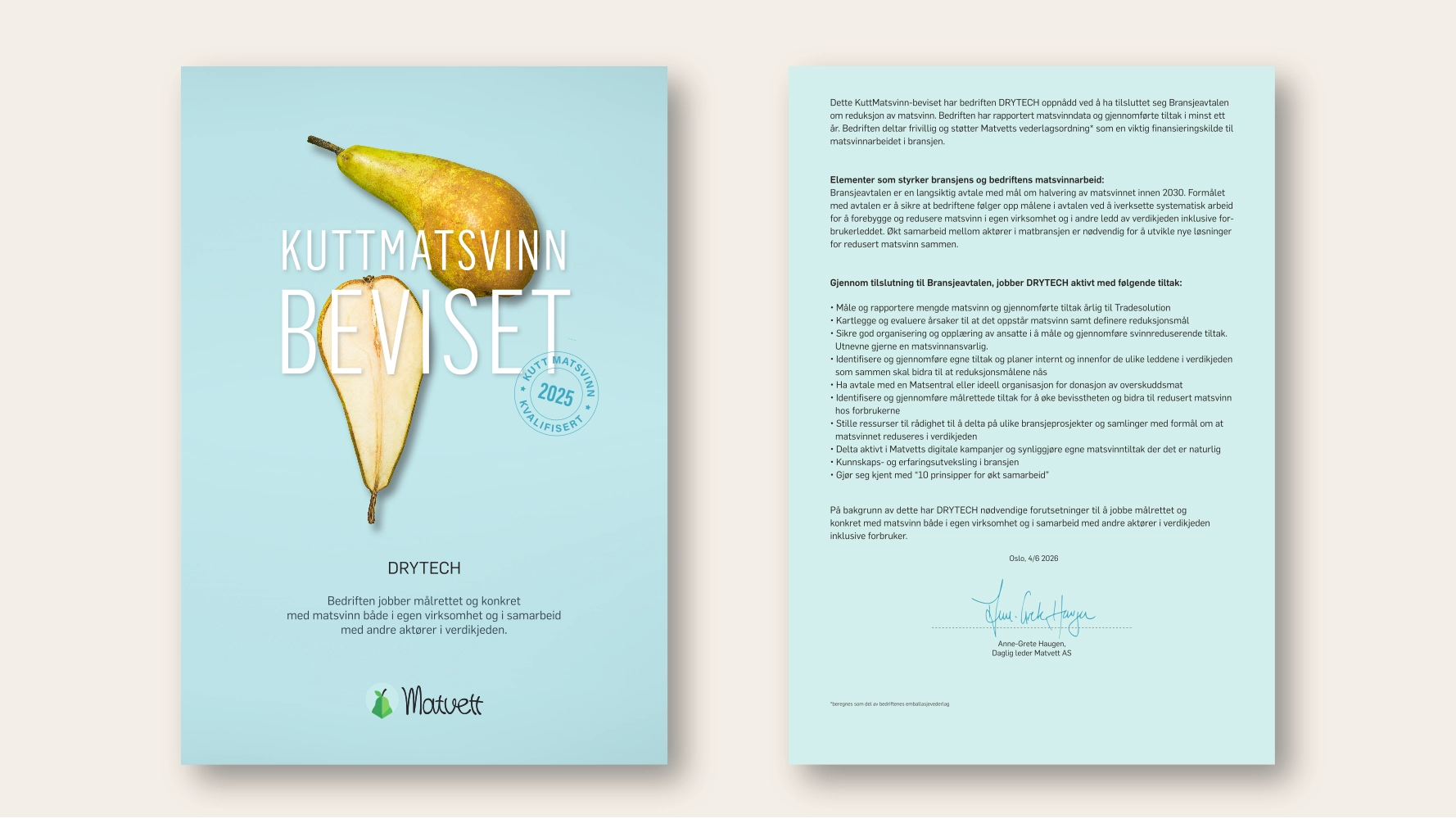 Tackling Food Waste
Less food waste, more value from each ingredient
Les mer om dette: Less food waste, more value from each ingredientDrytech has reduced food waste by 62.5 percent since 2020. Read about how better utilization of raw materials, effective procedures, and dedicated employees help us produce more food with less waste.
-
 Tackling Food Waste
Norwegian ingredients in our meals
Les mer om dette: Norwegian ingredients in our mealsOrigin matters to us when it comes to both meat and fish. The meat comes from Norwegian farmers, and we source the fish from our own waters here in the Arctic. It’s a short journey from the farm and the sea to our production facility in Tromsø.