

What we measure ourselves on.
To reach our 2030 targets, we need to:
- Work together — closer collaboration with suppliers and waste partners.
- Increase reuse and recycling to 85%.
- Make packaging smarter — 95% recyclable, reusable, or compostable.
- Track progress — we monitor waste per product unit every month.
Our approach.
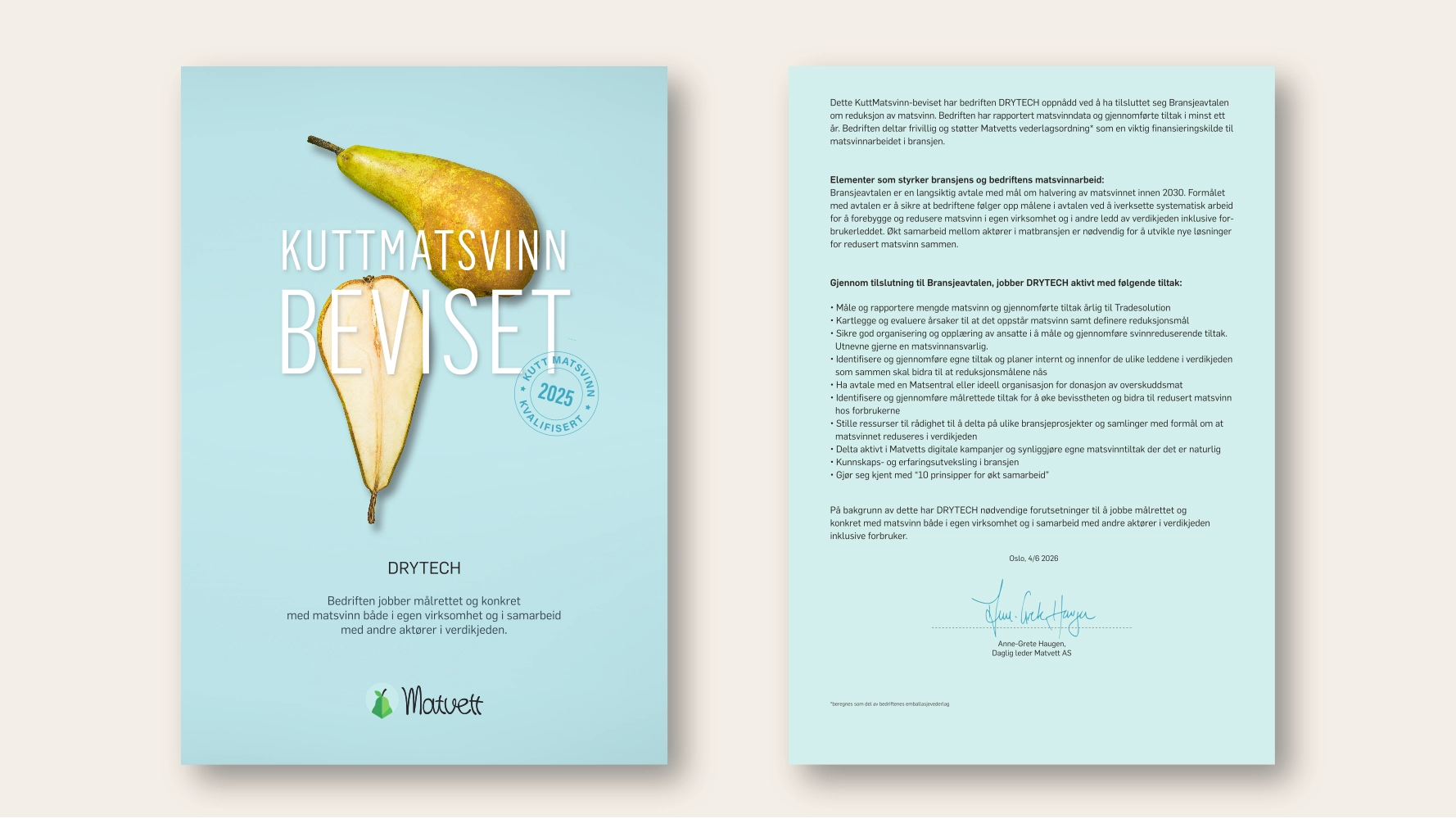
As a food producer, we understand our responsibility toward a more circular economy. Through the Plastic Pledge (Plastløftet), Drytech has committed to removing unnecessary plastic, increasing the share of recycled material where possible, and designing all packaging for recycling. We work closely with our suppliers to raise sustainability across the value chain, and we report progress annually. This is part of a broader environmental and climate strategy to shrink our footprint and help shape a greener food industry.
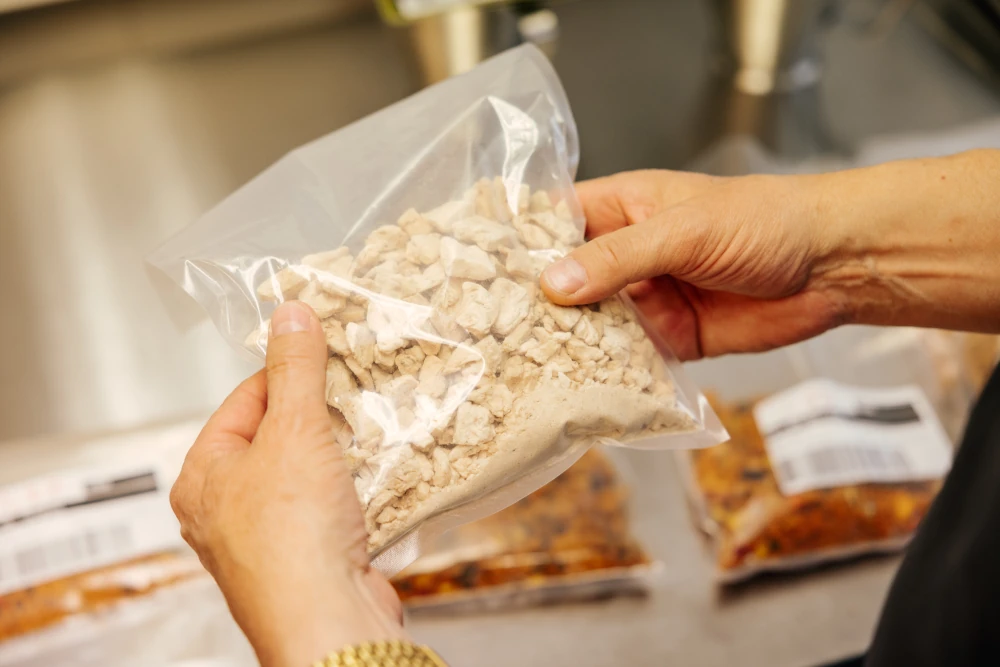
To support the work, we’ve launched joint projects with our suppliers to develop recyclable pouches that meet our environmental goals.
Learn more about the Plastics Pledge here: grontpunkt.no/plastloftet.
Where we stand.
We are open about the fact that we have not yet reached our goals. Not all planned measures were completed in 2024, and we have not yet reduced the amount of residual waste sent to incineration with energy recovery.
- Sorting rate in 2024: 53.16%.
- Sorting rate in 2025: 51.56%.
- Our target is 85% by 2030.
Although the sorting rate was slightly lower in 2025, the work has given us valuable insight into where the greatest challenges lie and which measures will have the greatest impact going forward.
- Residual waste per pouch is currently around 12 grams, which means we still have some way to go to reach our target.
- New agreement: From June 2025, we sort and recycle more types of plastic together with Remiks.
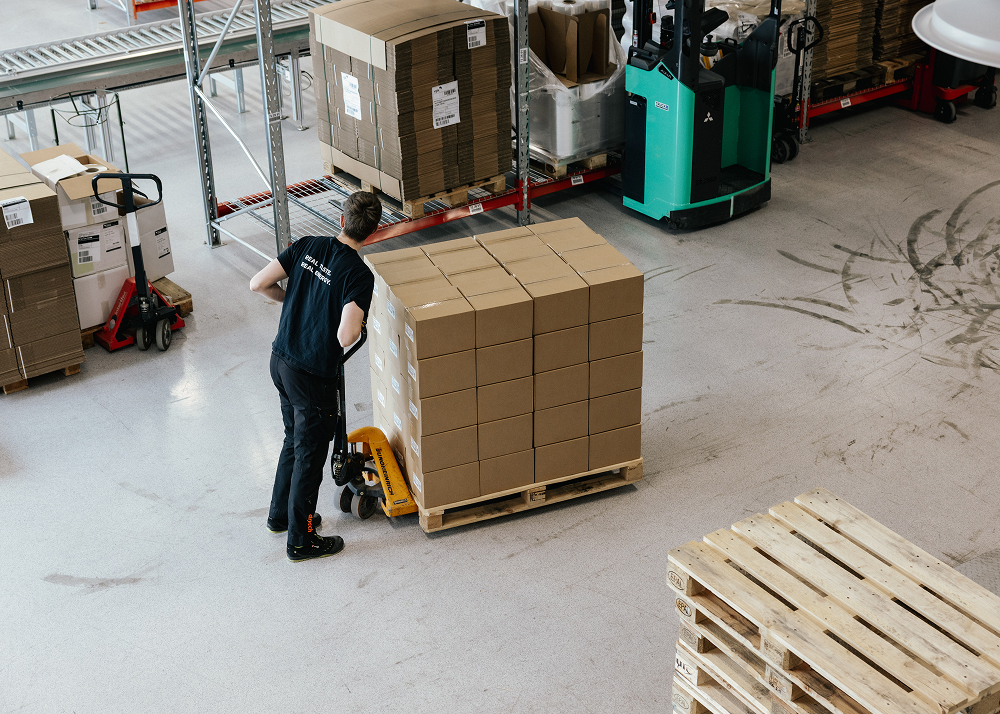
Over the past year, we have spent significant time and resources together with our employees and our waste supplier, Remiks, to improve waste management and increase the level of material recycling. Through mapping waste streams, improving sorting routines, and raising awareness across the organization, we have established an important foundation for further improvement.op.
Frequently asked questions.
Is REAL Turmat packaging recyclable?
We’re working toward 95% of packaging being recyclable, reusable, or compostable by 2030, and we’re developing new recyclable pouches with our suppliers.
What is the Plastic Pledge?
A commitment through Green Dot to remove unnecessary plastic, use more recycled material, and design for recycling. Drytech has signed.
Why is plastic such an important part of food safety?
In the food industry, plastic is primarily used to protect food. Packaging must ensure that products reach consumers with the right quality and without risk of contamination.
Plastic packaging contributes to:
- Protection against bacteria, viruses, and other contaminants.
- Extended shelf life by protecting products from oxygen, moisture, and light.
- Reduced food waste, which often provides a greater environmental benefit than reducing packaging alone.
- Safe transport and storage without damage to the product.
- Safe preparation, as with REAL Turmat, where the packaging can withstand contact with hot water and functions as a preparation container.
For products with a long shelf life, such as freeze-dried food, high-barrier packaging is essential. Without this protection, product quality would deteriorate faster, shelf life would be shorter, and food waste would increase.
Plastic packaging is an important prerequisite for safe food. It protects products from contamination, ensures a long shelf life, and helps reduce food waste. At the same time, we continuously work to reduce material use, choose safer materials, and develop more sustainable packaging solutions.
Internal links.
Latest actions
-
 Choosing Sustainable Materials
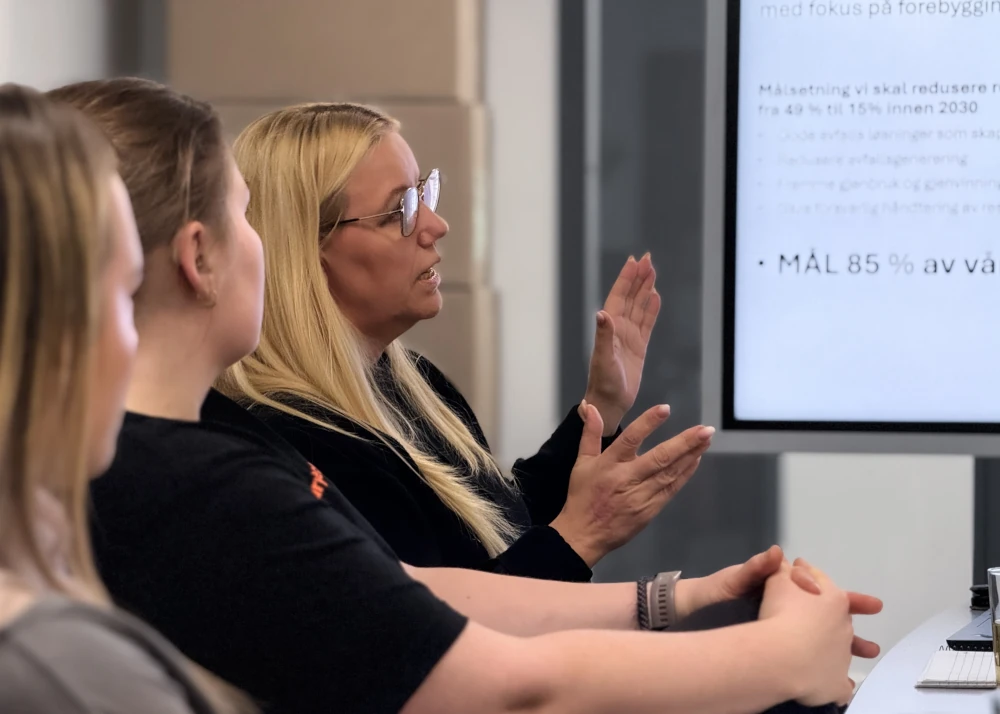
How We Are Increasing Recycling Rates in Production to 85%
Read more: How We Are Increasing Recycling Rates in Production to 85%How we increase recycling rates in production from 51% to 85%. Learn about our waste sorting improvements and sustainability initiatives.
-
 Choosing Sustainable Materials
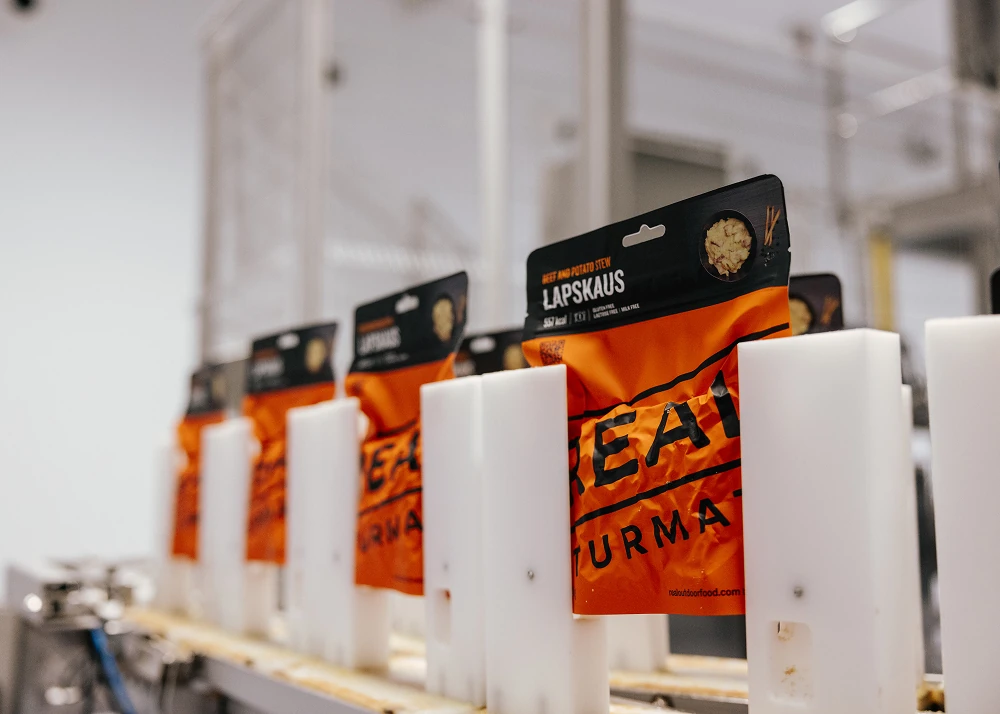
Project: Recyclable bag with extraordinary durability
Read more: Project: Recyclable bag with extraordinary durabilityWith support from the Research Council of Norway and a 9.8 million NOK grant, we are working with partners across the value chain to develop a fully recyclable pouch to replace our current non-recyclable laminated packaging.